Navy Federal Credit Union
- 3.7
- Rating
- 10.00M
- Installs
- Free
- Price

 Analysis by App-foxy
I use Navy Federal Credit Union as a practical mobile banking app rather than as a flashy financial dashboard. It is built for members of Navy Federal and covers the everyday jobs I expect from a credit union app: checking balances, reviewing transactions, moving money, and keeping an eye on accounts from a phone. The developer is Navy Federal, and the app is free, with an Everyone age rating. That combination makes it easy to recommend to eligible members who want their credit union close at hand without paying for a separate budgeting service.
My overall impression is positive but measured. The app feels most useful when I treat it as part of a repeatable money routine: check the account before a large purchase, review recent activity after payday, and handle transfers before they become urgent. It is less compelling for someone who wants a complete financial planning workspace that combines every bank, investment account, bill, and spending category in one place. Navy Federal Credit Union does its core job well, but its value depends heavily on whether Navy Federal is already the institution you use.
How I use Navy Federal Credit Union day to day
The baseline workflow is straightforward. I open the app to confirm what is available, scan recent activity, and then choose the specific task I need instead of wandering through every menu. That habit matters with financial apps because a quick balance check can easily turn into an unplanned review of old transactions. Keeping the visit focused makes the app feel faster and reduces the chance of overlooking the one item I actually opened it to check.
You May Also Like

 Pandora - Music & Podcasts
Pandora’s Music Is Easy to Start, but Harder to Recover
Pandora’s strength is its low-effort path from a seed to a station. Its weak spot is how much confidence it asks you to place in connection, setup, and quiet recovery.

 AccuWeather: Weather Radar
AccuWeather Review: A Quick, Clear Forecast for Everyday Decisions
For everyday plans, the best forecast is the one you can understand quickly. AccuWeather makes rain timing, radar, and local conditions easy to act on, with a few trade-offs.

 Hill Climb Racing
Why Hill Climb Racing Still Turns Crashes Into One More Run
A tiny car, a bumpy hill and one more upgrade: Hill Climb Racing keeps resurfacing because its simple chaos makes every near-miss feel personal.

 AliExpress - Shopping App
AliExpress Makes Global Shopping Feel Personal, but Shoppers Bear the Risk
AliExpress turns a global marketplace into a pocket-sized discovery engine. Its reach is useful, its shopping loop compelling, and its trade-offs easy to miss.

 Lords Mobile: Kingdom Wars
Lords Mobile Is a Kingdom-Building Routine, Not a Quick Match
A case-by-case verdict on the building, battles, device demands, and social commitments that make Lords Mobile rewarding for some players and exhausting for others.

 PDF Scanner app - TapScanner
TapScanner Makes Paperwork Easier to Capture, Check, and Share
TapScanner makes scanning with a phone feel less like a rescue operation and more like a dependable step in getting work done. Its capture tools are useful, though not flawless.
More From Our News Desk
View All News


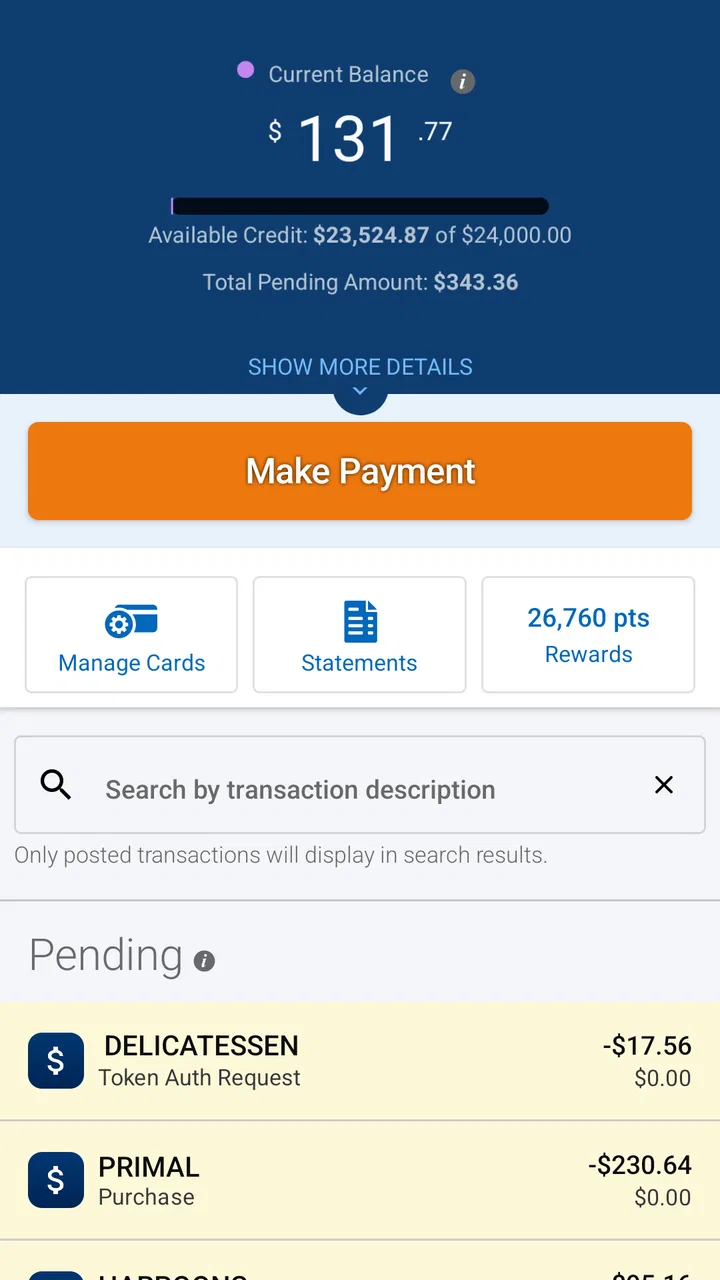
For everyday spending, I would use it before leaving for a trip, after making an unusually large purchase, or when several automatic payments are due close together. A balance by itself is not a complete picture of what I can safely spend, so I also look at pending activity and recent withdrawals. That is a small but important distinction: the app can help me see the account, but I still have to interpret timing and upcoming commitments responsibly.
Transaction review is one of the more useful routines. Instead of waiting until the end of the month, I prefer short checks after grocery shopping, fuel purchases, and online orders. This makes unfamiliar activity easier to recognize because I still remember what I bought. It also gives me a chance to catch a duplicate-looking charge or a payment I expected to clear but did not see. I would not treat a quick scan as a full fraud-monitoring plan, but it is a sensible first layer of awareness.
Transfers are another area where a repeatable approach helps. I would set a personal rule to verify the source account, destination, and amount before confirming anything, particularly when moving money between accounts with similar names. Mobile interfaces make it easy to tap through a familiar process too quickly. The app can make the action convenient, but convenience is not a substitute for checking the details.
A realistic example is payday on a Friday. I might open the app in the morning, confirm the deposit, review any automatic withdrawals that have already posted, and then move money for a planned expense. Later that evening, I would check whether a card purchase or transfer is still pending rather than assuming the visible balance tells the whole story. That two-step habit is more reliable than opening the app only when the account looks unexpectedly low.
The app also works well for a member who travels or manages money from more than one location. I can imagine using it at an airport to confirm whether a payment has cleared, or while visiting family to check an account before making a large purchase. The main advantage is access to Navy Federal accounts without needing a desktop session. The trade-off is that a phone is a smaller, more distracting environment, so I would avoid rushing through sensitive actions in a crowded place.
Settings and account habits worth checking
I would begin by reviewing the app’s available security and notification choices rather than accepting every default. Financial alerts are most useful when they help me notice meaningful activity without turning into background noise. If alerts become too frequent, I am more likely to ignore them. If they are too limited, I may miss a useful prompt. The right balance depends on how often I use the account and how many transactions normally pass through it.
I also recommend checking how the app presents accounts and recent activity on your particular device. A clean arrangement is valuable when several accounts serve different purposes, such as daily spending, savings, or a planned bill. Before transferring money, I would pause to confirm the account label and available balance. This is one of those habits that feels unnecessary until two accounts have similar names or a transfer is made under time pressure.
Device security deserves attention too. I would keep the phone’s operating system current, use a screen lock, and avoid accessing financial information on a device other people regularly borrow. Those are not special Navy Federal features; they are practical safeguards around any mobile banking tool. The app’s convenience is strongest when the phone itself is treated as part of the security setup.
The current version is 2026.2.2, and the minimum operating system is 11. That is useful to know before installing or updating, especially if an older phone is still in service. On a compatible device, I would still leave enough storage and keep the operating system maintained because banking apps can become frustrating when an outdated phone causes slow loading, failed updates, or compatibility problems.
One setting-related trade-off is notification fatigue. I do not want every minor event to interrupt my day, but I do want enough information to notice activity I did not initiate. My preference would be to use stronger attention for account changes and important payment events, while checking routine spending manually. If the app’s available choices do not match that preference, a calendar reminder for a weekly review can provide a simple backup.
Privacy is another reason to be deliberate. I would avoid displaying account details while standing in a queue or using an unsecured public screen. Even if the app itself is working correctly, shoulder-surfing and misplaced phones are ordinary risks. A good workflow includes closing the session or locking the device when finished, especially after reviewing balances or initiating a transfer.
Shortcuts that make repeat visits less tiring
Experienced use is less about discovering a secret button and more about reducing unnecessary decisions. I keep a consistent order: account overview first, recent transactions second, planned action third, final verification last. That sequence prevents me from starting a transfer before checking whether the money is already available or whether a pending transaction changes the situation.
I also avoid using the app as a substitute for memory. For recurring expenses, I keep a simple personal note of what each account is meant to cover. Then the app becomes the place where I verify reality rather than the place where I try to reconstruct my entire financial plan from scattered transactions. This is especially helpful when several payments arrive during the same week.
For transfers, I would use a deliberate confirmation pause. After entering the amount, I reread the source and destination before submitting. If the transfer is connected to a bill or a time-sensitive purchase, I also check the date and leave room for processing time rather than assuming every movement is immediate. The exact timing of a financial action can matter more than the number of taps involved.
Another efficient pattern is to review activity in batches. I might perform a quick check after a busy shopping day, then do a longer review once a week. The quick check is for surprises; the weekly review is for patterns. Separating those purposes keeps the app from becoming a constant source of low-value checking while still giving me a regular opportunity to notice something unusual.
The app’s large audience supports its role as a mainstream mobile banking option. It has more than five million installs, an average rating of 3.7, and roughly one hundred eight thousand ratings. Those figures suggest that many members rely on it, while the rating also reminds me not to describe the experience as universally smooth. A mobile banking app can be perfectly adequate for one person and frustrating for another because expectations, devices, account setups, and connection quality vary.
At around forty-three thousand written reviews, there is clearly substantial user feedback around the experience. I would read recent comments with some caution rather than treating every complaint or compliment as a complete verdict. App updates, phone models, and individual account situations can change the experience. For my purposes, the more useful question is whether the app handles my normal banking routine with fewer obstacles than the alternatives I already have.
Where the app reaches its limits
The biggest limitation is its focus. Navy Federal Credit Union is designed around Navy Federal membership and accounts, not around being a universal financial command center. If I use several unrelated banks, investment platforms, credit cards, and lending services, I may still need other apps to see the full picture. A dedicated budgeting app or a broader financial aggregator may be better for someone whose main goal is cross-institution analysis.
That does not make the app weak; it makes the choice more specific. I would choose it for direct access to Navy Federal accounts, not because I expect it to replace every financial tool. Someone who wants detailed spending projections, extensive investment analysis, or a single view across many institutions should compare it with services built specifically for those tasks.
The app is also not the ideal place for every complicated financial decision. A phone is excellent for checking activity or completing a familiar action, but less comfortable for comparing a large number of documents, reviewing a long account history, or carefully examining a major borrowing decision. For those situations, I would prefer a larger screen, a slower review, and possibly direct assistance when appropriate.
There is a practical access question as well. Because this is a Navy Federal app, it makes sense primarily for people who are eligible members or already bank with the credit union. Someone shopping for a new financial institution should evaluate membership, account suitability, service availability, and personal needs separately. Installing the app is not the same as deciding that Navy Federal is the right overall banking relationship.
The free price is a welcome advantage for existing members because there is no separate app purchase to justify. Still, “free” does not mean every possible banking service or financial decision has no cost; those questions belong to the underlying accounts and services, not simply to the download. I would review the relevant account terms before assuming that a mobile action changes the cost or timing of a transaction.
The Everyone rating makes the app broadly approachable from an age-classification perspective, but younger users still need sensible supervision around real money, passwords, and transfers. An accessible interface can help someone learn routine account management, yet it does not remove the need to understand what a transaction does before confirming it.
Who should use it, and who should look elsewhere
I think Navy Federal Credit Union is a strong fit for an existing Navy Federal member who wants dependable mobile access to everyday banking. It suits people who prefer checking their own activity regularly, making familiar account moves from a phone, and building a simple routine around payday and recurring expenses. It is also a good match for someone who values direct access to one institution more than a broad financial overview.
I would be more cautious recommending it to a person whose finances are spread across many providers. That user may find it inconvenient to switch between apps or manually combine information. A cross-platform money manager could offer a clearer household view, even if it is less direct for Navy Federal transactions.
I would also steer away from relying on it alone if the user needs extensive financial planning. The app can be part of a responsible system, but it should not be mistaken for a complete plan covering emergency savings, debt strategy, taxes, retirement, and long-term goals. Those decisions require more context than a mobile account screen can provide.
For a family member who helps monitor finances, the important question is not only whether the app is easy to open. It is whether the account arrangement, device access, and personal boundaries are appropriate. I would never share login details casually just to make monitoring convenient. A clear, authorized process is safer than turning one person’s phone into an informal control center.
My verdict after building a routine around it
After looking at Navy Federal Credit Union as a daily tool rather than a store listing, I see a focused finance app with a sensible role. It gives Navy Federal members a convenient way to stay close to their accounts, and its free availability removes an easy barrier to trying it. The strongest experience comes from using it with habits: check before spending, review after activity, verify transfers, and keep notifications useful rather than overwhelming.
Its limitations are equally clear. It is not the best choice for people who need one dashboard for every financial provider, nor is it a replacement for deeper planning tools or a desktop-sized review of complicated decisions. The average rating of 3.7 reflects a product that is useful to many people without being frictionless for everyone. I would judge it by the tasks I actually need, not by the hope that one app will solve every money problem.
My recommendation is simple: if Navy Federal is already your credit union, install it and make it part of a repeatable checking routine. Start with small, low-risk tasks, learn where your accounts and activity appear, then add transfers and alerts once the layout feels familiar. If you need a complete view of finances across multiple institutions, pair it with a broader tool instead of expecting this focused app to become something it was not designed to be. In that role, Navy Federal Credit Union is practical, accessible, and worth keeping on the phone for members who want their everyday banking within easy reach.
FAQs for Navy Federal Credit Union
01What features does the Navy Federal Credit Union app offer?
The Navy Federal Credit Union app provides a wide range of features including mobile check deposits, account management, bill payments, and fund transfers. Users can also access their credit score, locate nearby ATMs, and receive alerts for account activity. The app is designed to offer convenient banking solutions on-the-go.
02Are there any fees associated with using the Navy Federal app?
The Navy Federal Credit Union app itself is free to download and use. However, standard fees may apply for certain transactions, such as overdraft protection or wire transfers. It’s advisable to review the terms and conditions or contact customer support for detailed information about any potential charges.
03Is the Navy Federal Credit Union app secure?
Yes, the Navy Federal Credit Union app employs robust security measures to protect user information. These include encryption, biometric login options like fingerprint or facial recognition, and secure access codes. Regular updates are also performed to ensure the app remains secure against emerging threats.
04Can I use the app if I’m stationed overseas?
Yes, members stationed overseas can use the Navy Federal Credit Union app. It offers international access to manage accounts, pay bills, and perform transactions. However, it’s important to ensure that your device has internet connectivity and consider any potential data roaming charges.
05What should I do if I encounter issues with the app?
If you experience any issues with the Navy Federal Credit Union app, there are several support options available. You can contact their customer service through the app, visit their website for troubleshooting guides, or call their helpline. Additionally, checking for app updates might resolve any functionality problems.
Pros
- User-friendly interface for easy navigation.
- Robust security features for safe transactions.
- Wide range of financial tools available.
- Quick access to account information.
- 24/7 customer support via chat or phone.
Cons
- Limited features for non-members.
- Occasional app crashes reported.
- Some features require frequent updates.
- Limited international transaction support.
- No biometric login for older devices.

Navy Federal Credit Union
Gallery